
Okay, so I'm always the last to know. But who cares.
So that was exactly how I got to know of two of the very popular keitai shousetsu (mobile phone novels - it's a trend in Japan) that were serialized into dramas and movie versions.
The first was 恋空 (Koizora). Call me shallow, but I was attracted to the front cover of the novel. It was sparkly and pretty.

Koizora novel
Then I watched the drama. It wasn't spectacular, but was good.

After watching Koizora, I thought it was a really sweet story and it was rather good. But when I followed up with another drama, I realized that, in comparison, Koizora was quite forgettable.

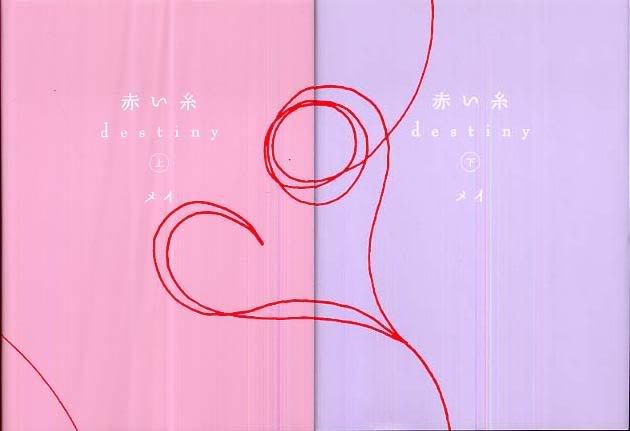
Akai Ito novel - not sparkly but simplicity is attractive
This drama, 赤い糸 (Akai Ito) suited my taste better because it shows the painful reality of drug abuse and its consequences in our (or rather specifically, Japanese) society. While I'm strongly against drug abuse and the like, this vivid portrayal of how drugs damage lives of the abuser and everyone around him/her makes me cold to the core.

Akai Ito is a fictious love story in its own right. It is interesting because it ties in a popular Japanese legend of the same title, Akai Ito (literally, Red Thread). As the legend goes, each man and woman destined to be soulmates are bound to each other by an invisible red thread by the little finger, and this fate will bring them together. In this story, Mei and Atsushi are bound by this thread of destiny. It's hard not to like how the author (of the same name, Mei) tie the lives of Mei and Atsushi together. They shared the same birthday, 29th February and have been in-and-out of each other's lives for more times than you can claim coincidence. The painful connection, however, was that Atsushi's mother got involved in drug trafficking for a man she loved and indirectly (it's a long story) led to breakdown of Mei's family. It was interesting (although painful) to watch how the cruel consequences of meddling with drugs kept two people, who are destined to be together, apart.
Oh, and Akai Ito came along with a very nice theme song too.
I personally preferred Akai Ito over Koizora because it includes thought-provoking issues such as drug abuse, the importance of a family unit, safe sex, suicide, friendship, and dating violence. It helps that the love story is not too mushy; it was just perfect and heart-warming. Plus, I like how the series introduced much of Japanese culture to the audience, such as cultural festivals, shinto cultures, cosplays, school culture, etc.
I'm definitely picking up the novel.
~みはる~
 By
By


0 penciled thoughts:
Post a Comment